Key Summary- Estonia lies within the humid continental climate zone (Köppen Dfb), with distinct seasons and moderate precipitation year-round.
- The Baltic Sea creates a subtle maritime influence along the coast, making winters slightly milder there than in the interior.
- Summer brings exceptionally long daylight hours, while winter days are very short, a key rhythm for anyone planning outdoor activities.
Estonia’s climate is shaped by its position on the eastern shores of the Baltic Sea, between latitudes 57.5°N and 59.5°N. The country is mostly flat, with no mountain ranges to interrupt prevailing westerly winds, so maritime air masses have far‑reaching inland effects. Almost all of Estonia falls under the Köppen Dfb classification, a warm‑summer humid continental climate. This means winters are cold and snowy, summers are mild to warm, and precipitation is spread fairly evenly across the year, without a true dry season. The lack of topographic barriers allows weather to shift quickly, and any month can deliver overcast skies or sudden showers. Snow cover typically persists from December through March, especially away from the coast, and midwinter temperatures often drop well below freezing, while summer highs usually range from 20°C to 25°C (68°F to 77°F). These swings frame a landscape of lush forests, peat bogs, and shallow lakes that stays vividly green through the growing season.
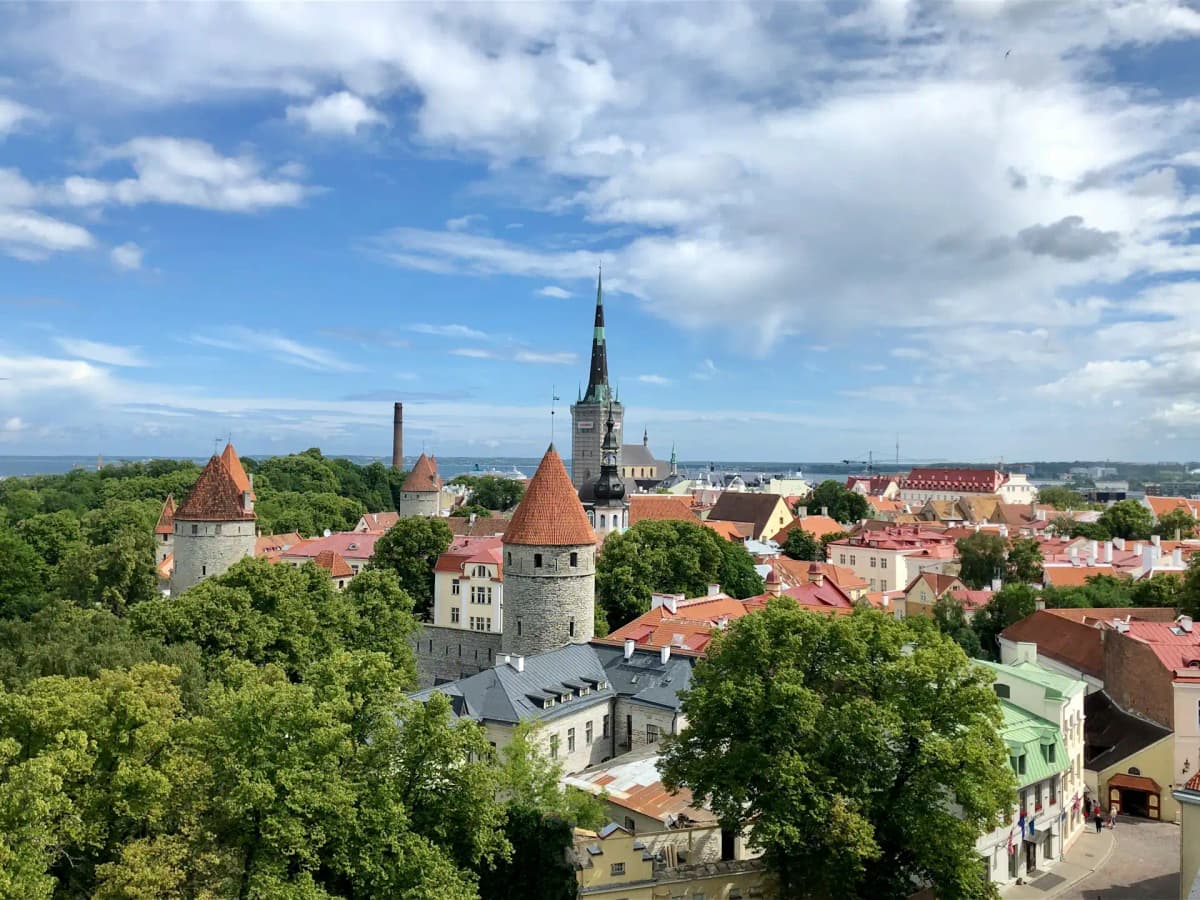
Regional differences across Estonia are subtle but noticeable. Along the northern coast and on the western islands such as Saaremaa and Hiiumaa, the maritime influence of the Baltic Sea takes the edge off winter cold and delays the onset of frost, while also keeping early summer slightly cooler than inland. In contrast, eastern and southeastern areas around Tartu and the Russian borderlands experience a more purely continental pulse: winters can feel deeper and summers occasionally push toward 30°C (86°F). Seasonal rhythm is dominated by daylight. In June and July, the sun barely sets, with over eighteen hours of dusk‑like twilight, making it a time when Tallinn’s medieval lanes and Lahemaa National Park’s coastal forests can be explored far into the evening. By December, daylight shrinks to roughly six hours, and a low sun angle casts long, muted tones over snow‑dusted bogs and frozen inlets. Rain arrives in all seasons, but late summer and early autumn can bring persistent drizzle, while dry, bright spells are more common in late spring and midsummer. This interplay of light, snow, and dampness defines the Estonian outdoor experience.
For travellers, June through August are the most comfortable months, with mild to warm temperatures and the long, luminous evenings that soften the edges of time. The main trade‑off is occasional summer rainfall and, even then, the chance of cool nights that call for a light jacket. September and October see a sharp drop in daylight and an increase in damp, windy weather, making them less predictable for unscripted wandering. Winter, from November to March, is dominated by cold, snowy conditions, short days, and icy streets, which can limit sightseeing but also create postcard scenes of Tallinn’s Old Town under snow. Spring melt often turns unpaved trails to mud, so April and early May are the soggiest window for rural exploration. Packing layers, a waterproof shell, and sturdy waterproof footwear is sensible in any season. Warm hats and insulated boots become essential if you are chasing Estonia’s winter stillness. The country’s climate, heavily shaped by its flat terrain and Baltic position, rewards visitors who embrace seasonal contrasts. For more detailed climate charts, monthly averages, and planning data, you are welcome to explore WeatherBox.