Key Summary- The Cayman Islands have a tropical savanna climate (Köppen Aw), defined by warm temperatures year-round and a strong seasonal rainfall divide.
- A distinct dry season from November to April brings sunny skies and steady trade winds, while the May-to-October wet season delivers high humidity, heavy afternoon showers, and a heightened tropical storm risk.
- The near-sea-level limestone terrain creates a uniform climate across all three islands, with no highland cooling and consistently warm seawater.
The Cayman Islands sit in the western Caribbean, at a low latitude where temperatures rarely stray from a balmy range of 24°C to 32°C (75°F to 90°F). This steadiness is the signature of a tropical savanna climate (Köppen Aw). Unlike equatorial climates that are wet all year, the Aw classification here is drawn by rainfall, not by temperature. A pronounced dry interlude and a rain-soaked season dominate the calendar. Warm Caribbean Sea surfaces feed the atmosphere with moisture, giving the air a stubbornly high humidity that seldom drops far below 70 percent. On our WeatherBox charts, you’ll see temperature lines barely flinching while rainfall bars surge and retreat, a visual echo of the region’s highly seasonal moisture.
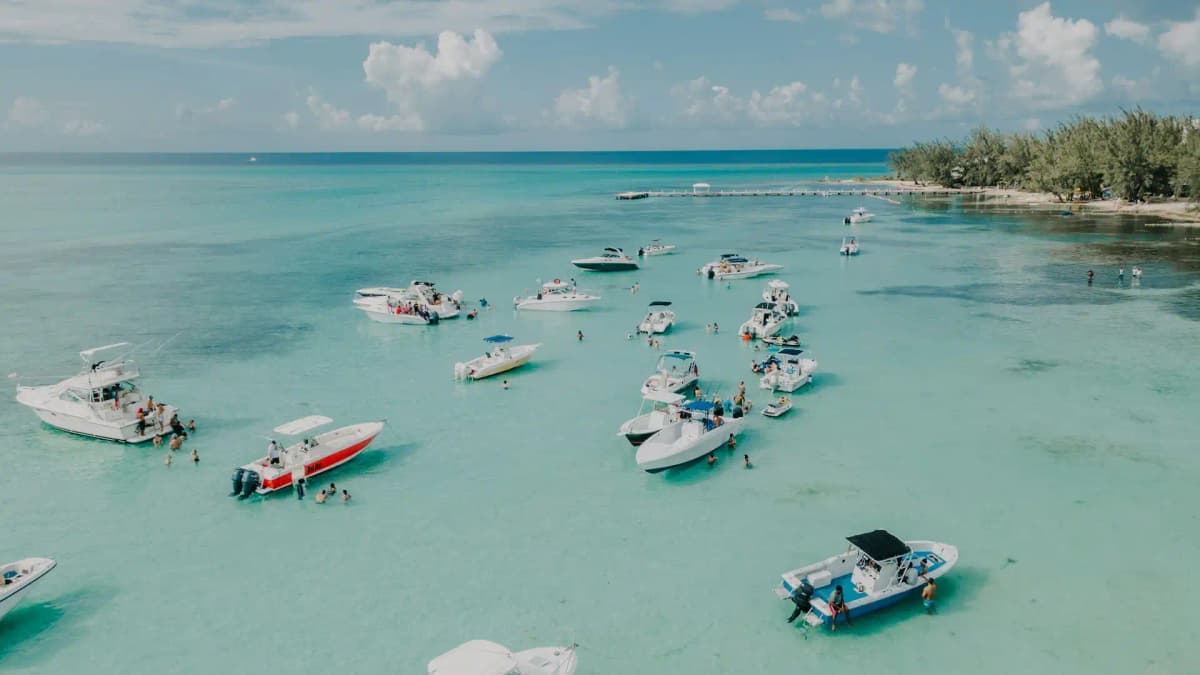
Because the islands are coral-capped limestone platforms with no peaks rising above about 43 metres (141 feet), elevation plays no role in cooling or capturing orographic rain. Grand Cayman, Cayman Brac, and Little Cayman all share the same maritime rhythm. During the dry season, northeast trade winds freshen the coastlines, keeping beachgoers comfortable on stretches like Seven Mile Beach. Skies are often dazzlingly clear, creating ideal conditions for snorkeling in the shallow sandbars of Stingray City or exploring the iridescent reefs off Little Cayman. As the Intertropical Convergence Zone drifts north, the wet season takes hold from May through October. Afternoon cumulus towers build quickly, releasing brief but intense downpours that can leave streets steaming. This is also the Atlantic hurricane season, and while direct hits are not a yearly event, watches and warnings become part of the late-summer rhythm. The heavy rainfall turns the landscape a deeper green, but it also raises mosquito activity in forested inland pockets.
For most visitors, the dry season between December and April offers the most sun-drenched conditions for wandering pastel-hued waterfronts or enjoying the gentle waters off Rum Point. The hotter, wetter months from May to October see fewer crowds and can reward flexible travelers with calm, bright mornings before clouds build. Packing calls for lightweight, breathable fabrics, high-SPF sun protection, and a packable rain jacket for those sudden tropical downpours. Insect repellent is a wise addition during the rainier window, and UV-protective swimwear adds comfort during long days on the water. The sea, always bathtub-warm, invites swimming in any season. A tropical rhythm of sun and brief, heavy showers defines life here. For a closer look at monthly rainfall patterns, humidity swings, and sea temperatures, explore the detailed climate charts and Köppen maps on WeatherBox.